



 English
 Français
 Deutsch
 Italiano
 Русский
 Español
Published on •Updated
German Chancellor Frederich Merz said on Friday that six out of seven G7 countries were against the US’ decision to give Russia a reprieve from oil sanctions. US President Donald Trump carried out the move in order to boost global supply amid soaring prices, which came as a consequence the US-Israeli war that was launched against Iran on 28 February.
ADVERTISEMENT

ADVERTISEMENT
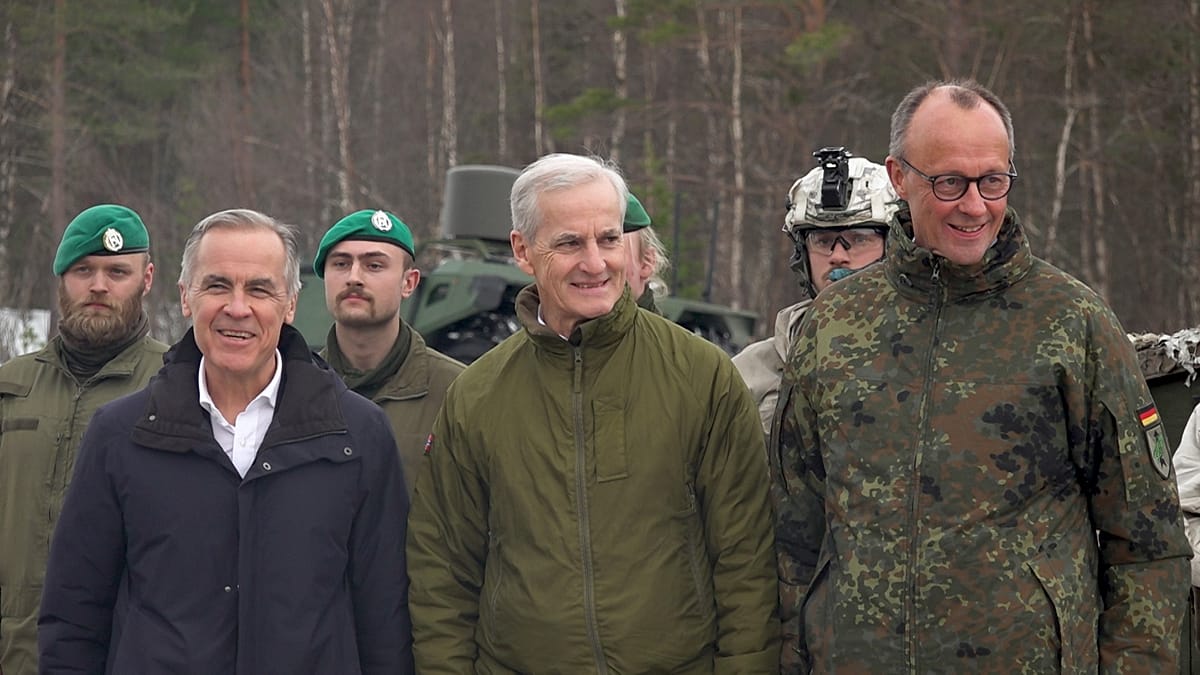
The leaders of Germany, Canada and Norway – all NATO member states – said they would use their channels of communication with the White House to try and change Trump’s mind.
The trio reiterated the alliance’s stance that maximum pressure still needs to be applied on the Kremlin over its war in Ukraine and its wider threat to global security.
“Six out of seven were clearly of the opinion that we should not release the sanctions against Russia”, said Merz.
“We were a little bit surprised when we heard this morning that the American government decided differently,” he told reporters at a press conference in Norway.
The three leaders agreed that maximum pressure should continue to be applied on the Kremlin over its full-scale invasion of Ukraine, and urged that Russia should not benefit from a reintroduction to global oil markets.
The decision “should be not the case because Russia is benefitting from that”, insisted Merz.
“We should put more pressure on Russia to bring this terrible war to an end as soon as possible, and that’s the reason why we are having a different view on this decision which was taken in [Washington] DC last night”, he said.
Asked at the press conference if G7 countries or NATO would lobby Trump to revise his decision, Canadian Prime Minister Mark Carney said “we all have direct lines to the president, and we’ll use them.”
Merz said he would speak to French President Macron to see if they can find a way around Trump’s plan: “We will have the opportunity to speak with each other over the weekend. And we will check what we can do.”
Arctic Sentry military exercise
The trio were on an official visit to witness NATO’s Arctic Sentry military exercise, which was agreed last January as part of the resolution to Trump’s claim he would “take” Greenland.
The alliance agreed to increase NATO’s presence in the region after Trump insisted it did not possess sufficient security architecture.
German Defence Minister Boris Pistorius also attended the military display, which consisted of several German Leopard Tanks and Norwegian Infantry Fighting Vehicles.
Pistorius told Euronews he is “much concerned” regarding the impact on the war in Ukraine if Russia regains access to oil revenue which could give it a significant advantage in sustaining its costly invasion.
“The only thing at the end to really force Putin at the negotiation table is to make clear that his revenues out of export of oil and gas will find an end,” he said.
“This is the opposite of that. It’s just a real disadvantage [for Ukraine],” he added.
Meanwhile, the Kremlin welcomed the move by the White House, saying US and Russian interests are aligned on the issue. “We see actions by the US as an attempt to stabilise energy markets. In this regard, our interests align,” said Russian presidential spokesperson Dmitry Peskov.
“We heard statements of US representatives that this exception has been indeed made now for oil already loaded before 12 March”, Peskov said.
Video editor • Shona Murray
Read the full article here